Vedic Tribe is happy to bring you a series on "philosophy Vs Vedanta".
The idea is not to argue supremacy of one over the other.
Instead, we will identify common words used in popular philosophy and show how they are inappropriate in understanding vedanta.
While doing so, we will also lay down appropriate sanskrit words - apt in understanding vedanta.
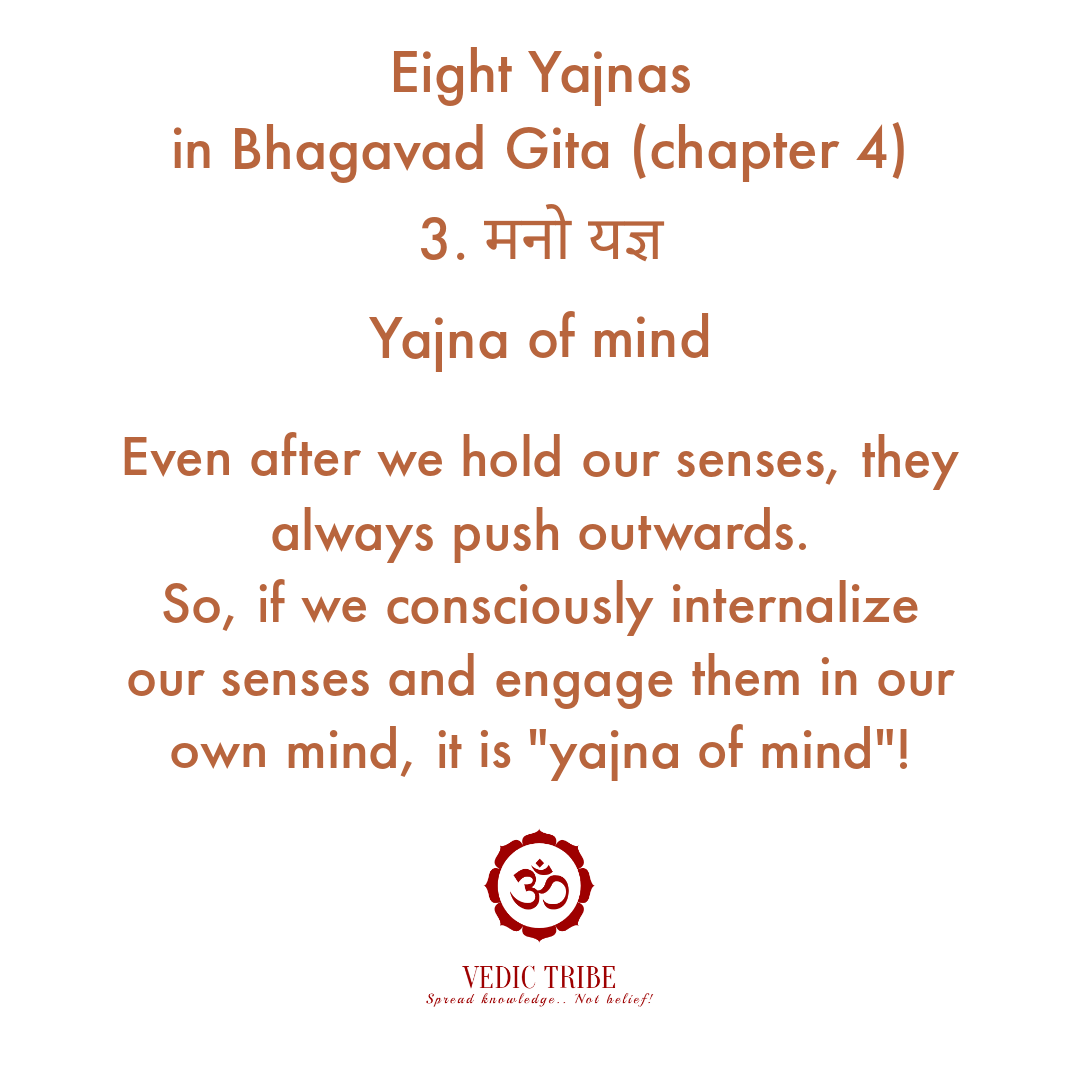
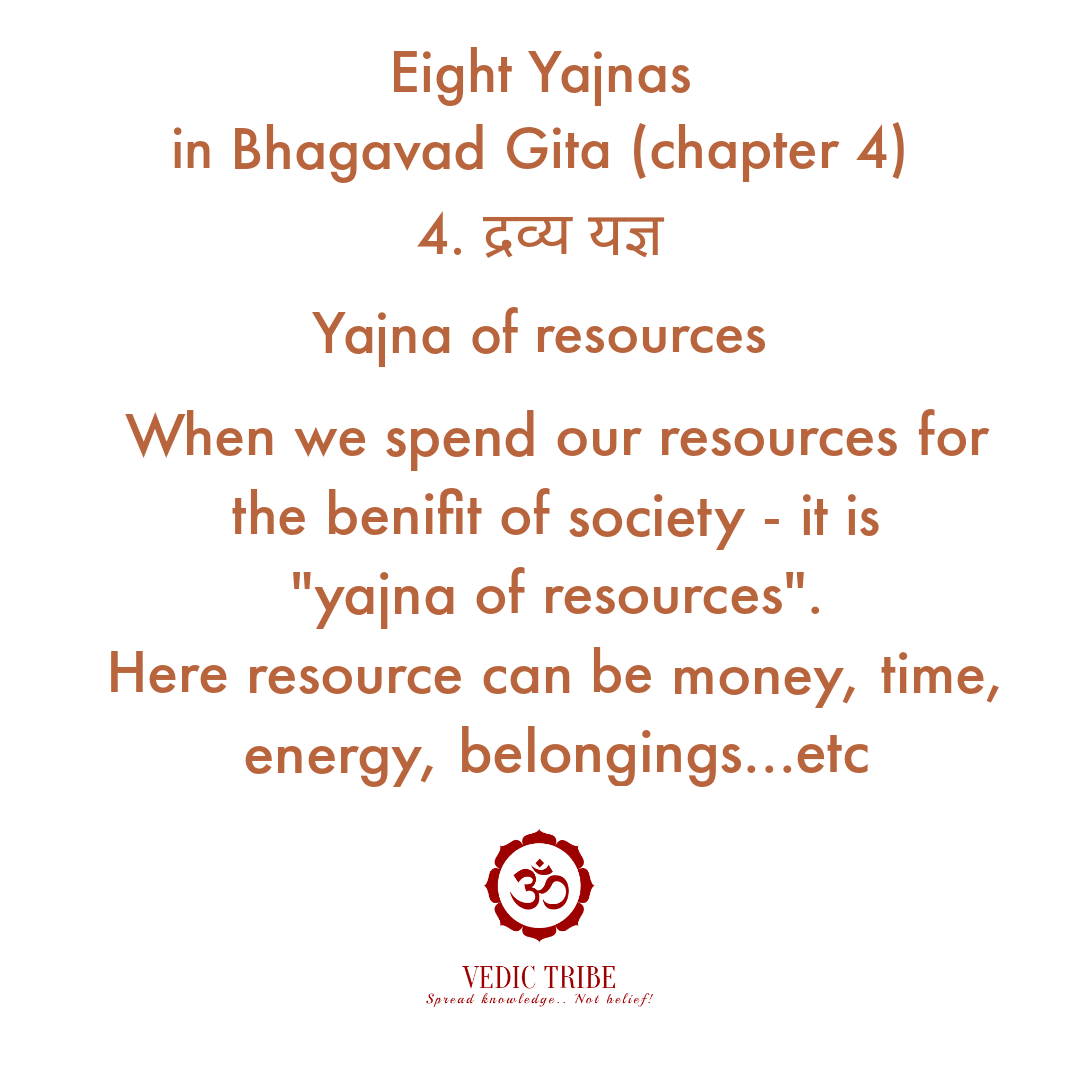
For example, translating "yajna" as "sacrifice" has done a huge damage to the way we understand Vedas. Once we understand the difference in these two words, we will start appreciating Vedas in their original form.
We are sure that our effort will make you start using appropriate sanskrit words and create enough interest in studying & living vedanta.
Madhwesh K
Vedic Tribe
---
Question 1:
Is "dualism" the right word for Sri Madhwacharya's teachings?
No!
Classical Dualism says "soul & body" are separate entities. Whereas Cartesian Dualism says "mind & body" are separate entities.
In popular philosophy, Sri Madhwacharya's teachings are called "Dualism". This is a misnomer (wrong nomenclature).
The right nomenclature for Sri Madhwacharya's teachings is "Tatva-vada" (तत्ववाद).
"Tatva-vada" indicates - understanding things *"as they are"*.
In Tatva-vada, (1) all of "matter" is distinct from each other; (2) all of "consciousness / jeevatma" is distinct from each other; and (3) "the super consciousness / paramatma" is distinct from everything.
In Tatva-vada, all these distinct entities are analysed "as-they-are". This analysis is done (a) as per our sensory observation, (b) as per our logical observation, & (c) as per vedic knowledge.
In dualism, there is no room for paramatma, sensory observation, vedic knowledge..etc.
Hence "Tatva-vada" is not dualism; instead it is "vedic pluralism".
The popular name "dvaita" is also a misnomer. Because in Sanskrit "dvaita" means "misunderstanding one thing as two things".
Hence, it is apt to use "Tatva-vada" for Sri Madhwacharya's teachings, instead of "dualism" or "dvaita".
Madhwesh K
Vedic Tribe
---
Question 2:
Is "monism" the right word for Sri Shankaracharya's teachings?
No!
Monism says "everything has ONE origin". It also says that though origine is the same, everything is distinct from each other.
In monism, everything comes from one origin and goes back to the same origin. They all however, remain distinct from each other.
In popular philosophy, Sri Shankaracharya's teachings are called "monism". This is a misnomer (wrong nomenclature).
The right nomenclature for Sri Shankaracharya's teachings is "Advaita" (अद्वैत).
"Advaita" literally means - there is only ONE and there is no second.
In Advaita, the single entity is "parabrahman".
In monism, the single entity can be matter or consciousness or anything that is not yet explained. It doesn't have room for any entity such as parabrahman.
In Advaita, the physical world is an illusion and in monism, the physical world is REAL.
Hence, it is apt to use "Advaita" for Sri Shankaracharya's teachings, instead of "monism".
Madhwesh K
Vedic Tribe
---
Question 3:
Is "mind" the right word for "Manas / मनस्"?
No!
According to materialism, Mind is a physical phenomenon. It is the result of complex neural activity. In many of its subschools, Mind is considered an illusion created by neural activity.
According to dualism, Mind is a non-physical phenomenon. It has a separate existence and cannot be explained from complex neural activity.
Thus, mainstream western philosophers are divided over whether the mind is a physical or non-physical phenomenon.
In popular philosophy, we use the term Mind for "Manas". But this is a misnomer (wrong nomenclature).
In vedanta, Manas is the instrument through which Jeevatma exercises "volition"!
The right nomenclature for Manas is "Volition" (संकल्प / विकल्प शक्ति).
In vedanta, Manas is a physical instrument. It is physical, yet subtle.
Manas is one of the five dimensions of "anthahkarana" (अंतःकरण) which means "subtle instrument".
In vedanta, Manas is neither an illusion nor a non-physical phenomenon; rather it is very much a physical phenomenon and a real one.
In western philosophy, Mind has many faculties like imagination. But in vedanta, Manas is one of the faculties of Anthahkarana.
Hence, it is apt to use the word "Manas" in Vedanta rather than the word Mind.
Madhwesh K
Vedic Tribe
---
Question 4:
Is "sacrifice" the right word for "Yajna / यज्ञ"?
No!
"Sacrifice" generally depicts killing of a living being in a ritual as an offering to deities.
On the other hand, "Yajna" is a social gathering for worship of deities and also for distribution of resources, rarely involving sacrifice.
Yajna comes from the root word "yaj" (यज्ञ).
In Vedanga, "yaj" indicates communion / socialization (संगतिकरण); it indicates donation / distribution of wealth (दान); it indicates worship of deities (देव पूजा)...etc. These are the core concepts of Yajna. On the other hand, ritualistic aspects of Yajna are very minimal.
In fact, only one-third of "srauta-Yajnas" (ritualistic yajnic codes) requires animal sacrifice. Though they were prominent at one point in history, they all disappeared. Only the core concepts of Yajna prevailed.
Krishna in Bhagavad Gita elaborated these core concepts and it became the foundation for vedanta.
When the ritualistic aspects remained only as academics, Sri Sayanacharya revived this school of thought and provided interpretation of Vedas mainly from ritualistic perspective.
When Mr. Max Muller translated Vedas, he relied on Sri Sayanacharya's interpretation only and ignored all other interpretations - especially that of Vedanta.
Consequently, western philosophers perceive Vedas & Yajnas only from a ritualistic perspective. Their lame usage of the term "sacrifice" became a mainstream term for Yajna.
Hence, it is apt to use the word "Yajna" in Vedanta rather than the word "Sacrifice".
Madhwesh K
Vedic Tribe
---
Question 5:
Is "Hymn" the right word for "Mantra / मंत्र"?
No!
"Hymn" indicates a song of praise. Hymns are composed as lyrical poems and very rarely have esoteric meaning. In other words hymns can be easily translated and their meaning can be easily understood.
On the other hand, "Mantra" is a linguistic exposition of the experiences of sages. They are full of esoteric meanings. Collection of these mantras are "Vedas".
Though Mantras include praise of deities, they have a wide range of expositions. Agni sukta, Rudra Namaka…etc are examples of such praise.
In addition, Mantras can be extremely esoteric like in Asyavamiya Sukta; they can be highly meditative like Gayatri Mantra; they can be stories like in Kaushitiki brahmana; they can be highly psychological like Shatapata brahmana; they can be philosophical like Talavakara upanishad…etc.
The root of "Mantra" is man (मन्) indicating a psychological phenomenon.
Mantra can be a syllable, verse, prose, poem, song …etc. On the other hand, hymns are essentially songs.
Instead of Mantra, "stotra" (स्तोत्र) is closer to "Hymn". Because stotra are essentially verses of praise.
Hence, it is apt to use the word "Mantra" in Vedanta rather than the word "Hymn".
Madhwesh K
Vedic Tribe
---
Question 6:
Is "Priest" the right word for "Brahmana / Brahmin"?
No!
"Priest" refers to a person who conducts religious rituals.
Brahmana (ब्राह्मण) refers to "the one who is conscious of Brahman / the almighty" (ब्रह्म जानाति ब्राह्मणः).
In core Vedic tradition, the person who conducts rituals is called "Yajamana" (यजमान).
In shrauta-Yajna sutras (ritualistic code), Yajamana is assisted / guided by four people who know & practice four Vedas. These learned persons are called "purohita" (पुरोहित).
Hence, the term Priest is closer to the term Purohita and is not at all linked to the term Brahmana / Brahmin.
However, western philosophers call Brahmana / Brahmin as "priestly caste / priestly class". This is a lame definition based on birth or occupation.
Texts in Vedic tradition overwhelmingly use the term "Brahmana" for the one who is on a spiritual path. They do not attribute birth or occupation to the term. However, in popular usage, the term "Brahmana" is attributed to birth or occupation.
Hence, it is apt to use the word "Purohita" in Vedanta for the word "Priest" and reserve the word "Brahmana" to someone who is on the spiritual path.
Madhwesh K
Vedic Tribe
---
Question 7:
Is "Theist" the right word for "Astika" (आस्तिक)?
No!
"Theist" is the one who believes in the existence of God.
In the traditional sense, "Astika" refers to someone who accepts that Vedas are the source of correct knowledge. Only in the latter Sanskrit texts the term expanded to cover (i) the one who accepts that "self / Jeevatma" exists; and also (ii) the one who accepts that "supreme / paramatma" exists.
It may be noted that there are many schools of thought in Vedic tradition - that accept Veda as the correct source of knowledge, but do not accept the existence of God. These schools are called Astika-Nirishwara-Darshana.
For example, the classical Samkhya school of thought accepts Vedas, but does not accept the existence of God.
Consequently, it is not necessary that an "Astika" have to be a "Theist". It is possible that an "Astika" can be an "Atheist" too.
Hence, it is apt to use the term "Astika" to someone who accepts Vedas, instead to someone who believes in the existence of God.
Madhwesh K
Vedic Tribe
---
Question 8:
Is "Illusion" the right word for "Maya" (माया)?
No!
"Illusion" means misinterpreted perception. Ie., When our sensory perception is distorted we misinterpret the sensory information.
For example, if we walk through thick fog, our brain keeps misinterpreting everything we see. This is because our vision is distorted. If we misinterpret a statue as a person, then it is called illusion.
Before the advent of "Advaita", the word "Maya'' was used in a wider way in vedic & puranic literature.
Maya indicated - divine power, appearance, that which is constantly changing, relative, cheating…etc.
Divine power of Brahman is called Maya. Laxmi alongside Vasudeva is called Maya. Appearance of objects is also called Maya (appearance indicates different looks of the same object instead of the illusion of the observer). Torrent keeps changing rapidly; anything that keeps changing is also called Maya. Happiness, sadness…etc are relative experiences; anything that is relative is also called Maya. Maya is also used to indicate cheating. The term Maya is used in many other ways and it seldom suggests "illusion".
After the advent of "Advaita", the word "Maya'' became popular to indicate "illusion". Within Advaita school itself, there are many interpretations of the term "Maya". The prominent interpretation is "sad-asad-vilakshana" (सदसद् विलक्षण) ie., something different from existent & non-existent. In this prominent interpretation in Advaita itself, "Maya" doesn't indicate illusion.
In yogic terminology, "vikalpa" (विकल्प) is the right term for illusion / imagination/ fantasy.
Hence, it is apt to use the term "Maya" in vedanta instead of "Illusion".
Madhwesh K
Vedic Tribe
---
Question 9:
Is "Religion" the right word for "Dharma" (धर्म)?
No!
Though there are few overlapping elements, the concept of religion is mostly different from the concept of Dharma.
Religion is a wider term covering social phenomenon, behavioral phenomenon, morals, beliefs, faith, ethics, revelations, holy scriptures, holy places etc.
Dharma is that which sustains, retains maintains, holds together - the world order (धारणात् धर्म).
The celestial bodies are moving following a cosmic order - it's their Dharma. Nature works in a particular way - it's nature's Dharma. Ultimately everything works in Parabrahman's way - it's sanatana-dharma.
Dharma not only indicates the fundamental nature of everything, but also indicates their activity in a particular way. Though this idea was present in Vedic literature, it gained popularity via Buddhism. In later Vedic tradition, especially via Dharma-sutras, the term Dharma was narrowly used to indicate individual's duty.
But the core Vedic concept of Dharma is - the way of world order; the way of Parabrahman.
Dharma has three levels. The first is "individual level" (वैयक्तिक धर्म); this varies from one individual to another. The second is "social level"; this is accepted by a large number of individuals in a society, but it still varies from one society to another. The third and the supreme level is "eternal level" (सनातन धर्म); in spite of changes in individual & social way of things, the eternal-dharma remains intact. So, it is called "the way of Parabrahman"
In Vedic tradition, the utmost goal of an individual is to comprehend this eternal-dharma and walk its path. Even in Gayatri Mantra, an individual seeks mind to be guided in "the way of Parabrahman".
Hence, it is not apt to use the term "religion" for the word "Dharma".
Madhwesh K
Vedic Tribe
---
Question 10:
Is "Creation" the right word for "Srishti" (सृष्टि)?
No!
In theistic philosophy, creation of cosmos - is an act of God and the world comes into existence out of nothing but God's will. Here, this creation is a one time event.
In atheistic philosophies, creation of the cosmos occurs on its own and there is no entity called God. Here, there is a difference of opinion. One school proposes that creation occurs out of "nothing" and another school proposes that creation is a cycle of ever-existing physical matter.
In Vedic tradition, there is no concept of creation.
The word Srishti comes from the root srij (सृज्). It indicates flow & push.
In Vedic tradition, there are three eternal entities: Physical matter, Jeevatma and Paramatma / Parabrahman.
Parabrahman pushes & makes admixture of Physical matter and Jeevatma. The flow of this admixture is Srishti. This is an eternal process and not a one time event.
Srishti occurs from entities already existing and there is no concept of "creation from nothing".
Hence, it is apt to use the term Srishti in Vedanta instead of the term creation.
Madhwesh K
Vedic Tribe